
The 402 Status Code — The Internet’s Unused Payment Primitive
In 1997, HTTP/1.1 introduced a status code called 402 Payment Required. Unlike 200 (OK), 401 (Unauthorized), or 404 (Not Found), it was marked “reserved for future use” and never standardized into real-world payment infrastructure.
For nearly 30 years, the web had a payment status code — but no agreed-upon way to actually use it.
That gap is now being addressed by protocols like x402 — and by infrastructure providers such as the PayAI Network, which operates a production-grade x402 facilitator that powers real-world 402 payment flows across multiple blockchain networks.
Developers historically built monetization layers on top of HTTP instead of inside it:
- API keys
- OAuth flows
- Stripe subscriptions
- Usage dashboards
- Account creation systems
What Is HTTP Code 402?
The 402 status code is defined as a server response indicating that payment is required before access to a resource is granted.
The issue was never the existence of HTTP code 402. The issue was the lack of:
- A standard way to specify the amount
- A way to define currency
- A payment destination format
- A mechanism to verify settlement
If you want a deeper walkthrough of how the flow works in practice, this explainer on x402 payment required explained breaks down the full request-response lifecycle.
How x402 Activates 402 Payment Required
The x402 protocol, originally introduced by Coinbase and now developed as an open standard (5,400+ GitHub stars, 180+ contributors), defines how 402 responses can carry structured payment instructions and how clients can respond programmatically.
You can also learn more about the protocol fundamentals in the official PayAI x402 introduction, which outlines how HTTP-native payments are structured.
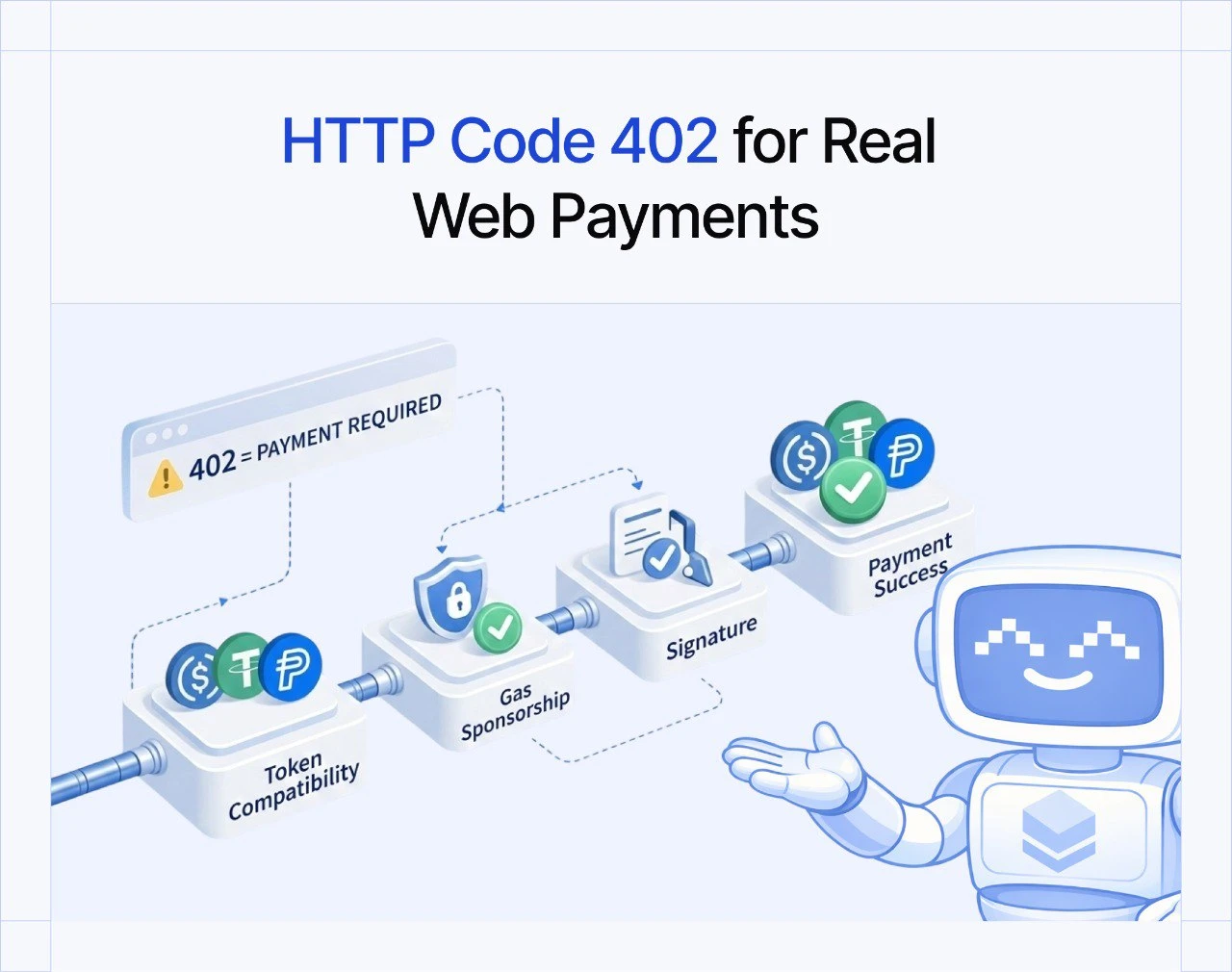
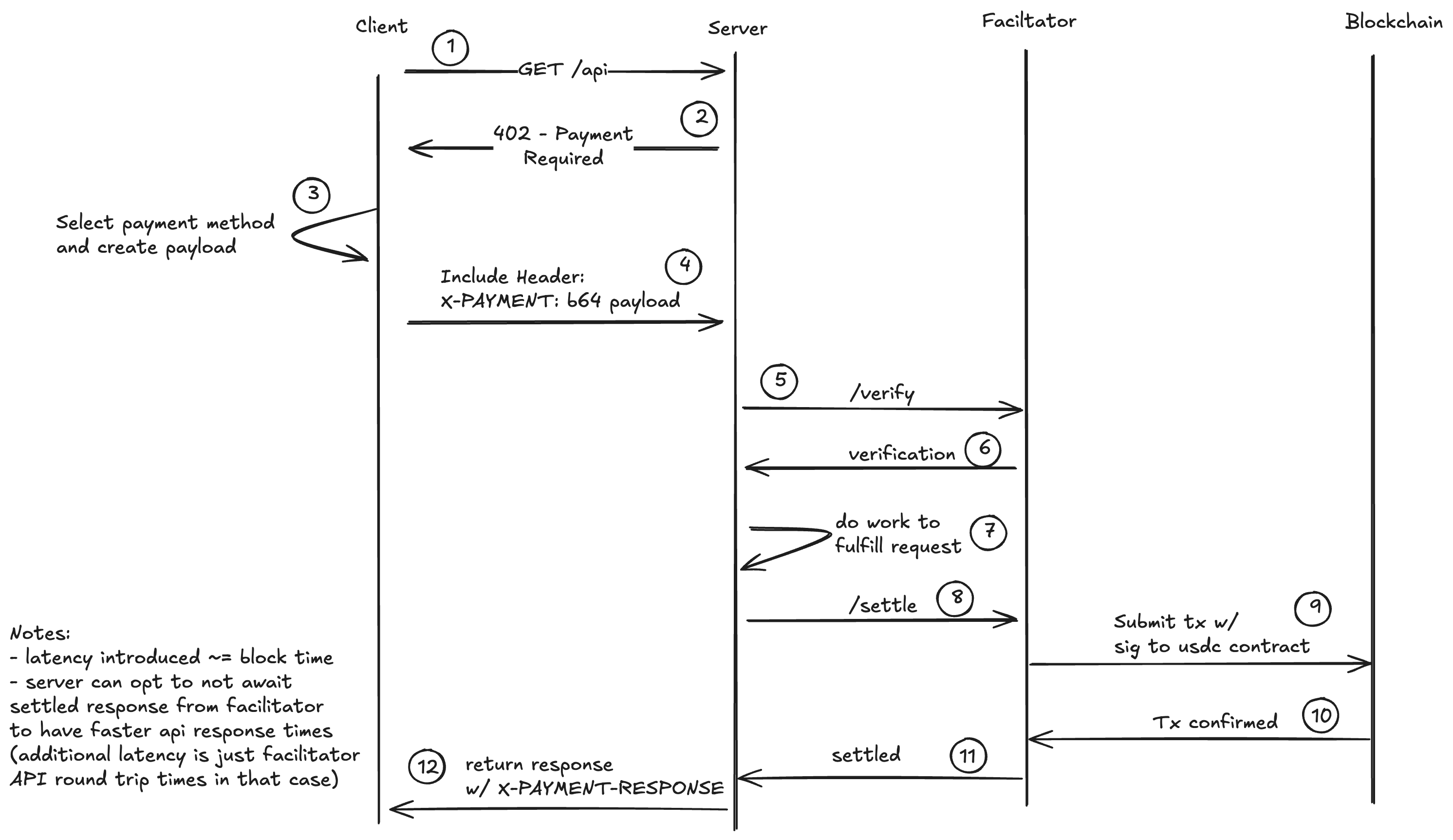
Under x402, a typical flow looks like this:
- Client requests a protected resource
- Server responds with 402 Payment Required
- The response includes payment details in a
PAYMENT-REQUIREDheader — Amount, Currency (e.g., USDC), Network, Destination address - The client signs and submits a blockchain payment
- The payment is verified
- The resource is returned
Standard HTTP vs x402 Payment Flow

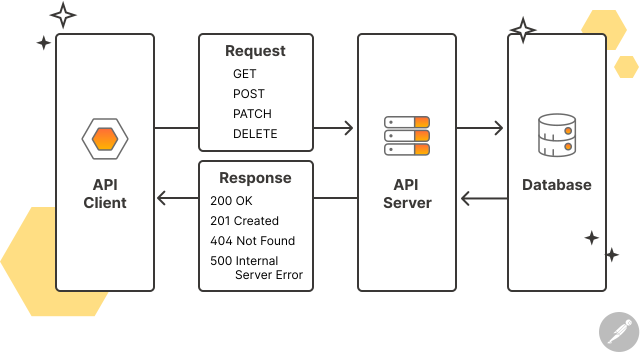
 Traditional API Flow
Client → GET /resource
Server → 200 OK
Client → GET /premium-resource
Server → 402 Payment Required
Client → Signed Payment
Server → 200 OK
Instead of provisioning long-lived credentials, access can be granted via pay-per-request payments.
Why x402 Matters Now — AI Agents and Micropayments
AI agents are increasingly becoming autonomous consumers of APIs. Unlike humans, they need to discover services, pay, and execute transactions without manual onboarding.
Traditional payment systems introduce friction:
- Account creation
- Email verification
- API key issuance
- Monthly subscriptions
- Manual billing workflows
Micropayments Infrastructure for AI Systems
x402 enables pay-per-request payments, allowing agents to transact at very small denominations.
An agent can:
- Request a service
- Receive a 402 response code
- Pay $0.01 in USDC
- Continue execution
No API key negotiation.
No subscription commitment.
This model depends on robust micropayments infrastructure capable of verifying signatures and settling transactions in real time.
For a deeper exploration of how micropayments work with x402, this breakdown of micropayments infrastructure explains the technical design in detail.
Stablecoin Payments Over HTTP
x402 supports stablecoin payments such as USDC.
Stablecoins are well-suited for stablecoin payments over HTTP because they offer:
- Stable value
- Fast settlement
- Global accessibility
- Reduced chargeback risk
The move toward agent-native payments infrastructure aligns with:
- Usage-based SaaS billing
- Machine-to-machine commerce
- AI-driven marketplaces
- On-demand data services
What Is an x402 Facilitator?
The x402 protocol defines the structure of payment requests. The operational execution happens within an x402 facilitator.
A facilitator acts as a web payments facilitator responsible for:
- Verifying payment signatures
- Validating nonces
- Preventing replay attacks
- Screening sanctioned addresses
- Executing and confirming on-chain settlement
- Run blockchain infrastructure
- Manage wallet systems
- Handle gas abstraction
- Monitor confirmations
- Implement replay protection
Core Endpoints of an x402 Facilitator
A production-grade facilitator typically exposes:
/verify— validate payment signature without executing/settle— execute settlement on-chain
Introducing PayAI — A Multi-Network x402 Facilitator
The PayAI Facilitator is a production-ready multi-network implementation of an x402 facilitator.
Operated by the PayAI Network, it supports:
- Solana
- Base
- Polygon
- Avalanche
- IoTeX
- Peaq
- Sei
- XLayer
- SKALE
Full technical reference is available in the PayAI documentation, including the step-by-step x402 quickstart guide for merchants.
Key Characteristics of PayAI
Multi-Network from One Endpoint
Merchants integrate once. Network selection is handled at the protocol level.
Gas Abstraction
The facilitator abstracts network fees, simplifying adoption for both buyers and API operators.
Fast Settlement
PayAI targets low-latency confirmation suitable for request-level payments.
Built-In Compliance
OFAC screening and sanctioned entity filtering are built into the payment flow.
Developer-Centric Ecosystem
PayAI provides SDKs in:
- TypeScript
- Python
- Go
- Java
PayAI functions as both a solana payments facilitator and a broader multi-network payment facilitator within the x402 ecosystem.
How PayAI + RelAI Work Together
RelAI is an x402 API marketplace and reverse proxy platform that allows merchants to monetize existing APIs without modifying backend logic.
Integration Flow
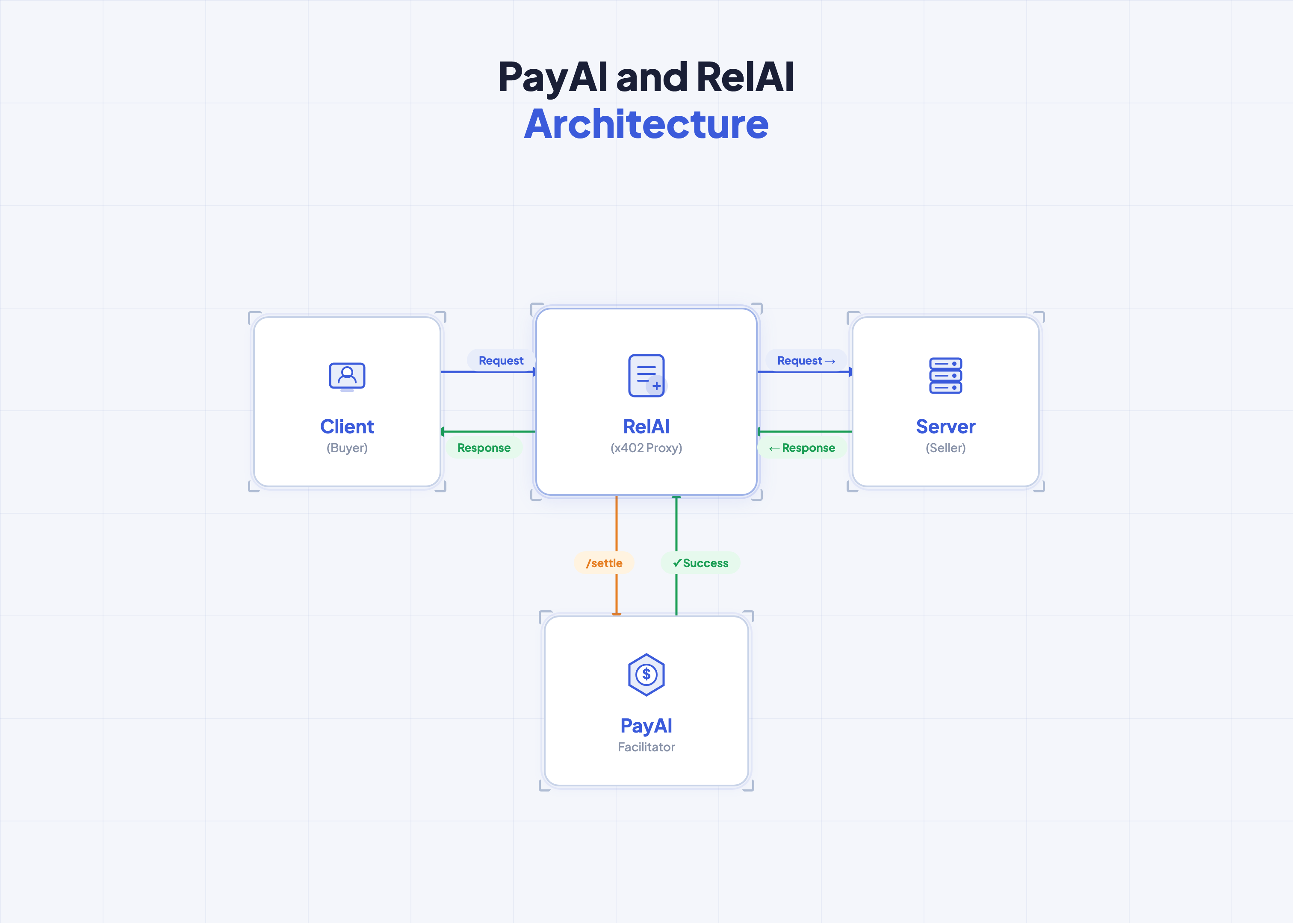
- A merchant connects their existing API to RelAI
- Pricing is defined per request or endpoint
- PayAI is selected as the x402 facilitator
- RelAI enforces 402 Payment Required
- PayAI verifies and settles payment
- The request is forwarded to the origin API
PayAI handles verification, multi-network settlement, and compliance.
This structure lowers the barrier to launching paid APIs using HTTP code 402.
Getting Started with x402 and PayAI
There are two primary paths.
Option 1: Direct Integration
Using the x402 quickstart guide, merchants can:
- Configure the facilitator endpoint
- Choose a supported network
- Add middleware from the SDK
Option 2: No-Code Monetization via RelAI
- Connect your API to RelAI
- Define pricing
- Select PayAI as the facilitator
- Deploy
FAQ — x402 Facilitator & 402 Payment Required
What is HTTP 402?
HTTP 402 is a status code labeled “Payment Required.” It was introduced in HTTP/1.1 but left unused until payment verification standards such as x402 were defined.
What is an x402 facilitator?
An x402 facilitator is a web payments facilitator that verifies payment signatures and executes on-chain settlement, handling compliance and replay protection for merchants.
How do micropayments work with x402?
A server responds with 402 Payment Required and specifies payment details. The client signs and submits payment. The facilitator verifies settlement before the resource is returned.
What networks does PayAI support?
PayAI supports Solana and multiple EVM-compatible networks including Base, Polygon, Avalanche, IoTeX, Peaq, Sei, XLayer, and SKALE.
Where can I learn more about x402?
You can explore the PayAI x402 introduction, review the technical documentation, or explore code examples in the PayAI GitHub repository.
Closing Thoughts
The 402 status code has existed since the early days of HTTP but lacked a usable payment layer.
With x402 and infrastructure providers like PayAI, HTTP code 402 can now support real payment workflows. Combined with RelAI’s proxy-based monetization model, developers can convert existing APIs into paid services without rebuilding backend systems.
Payments can now be embedded directly into the request lifecycle — making HTTP code 402 a functional part of modern web architecture.